If you want to legally file federal tax returns for clients in 2026, you need an Electronic Filing Identification Number (EFIN) from the IRS. It is the single most important credential for a new tax preparer, and the application process trips up more people than any other step in opening a tax office. This guide walks you through the entire 2026 application — what it is, who qualifies, how long it really takes, and what you can do to keep earning while you wait.
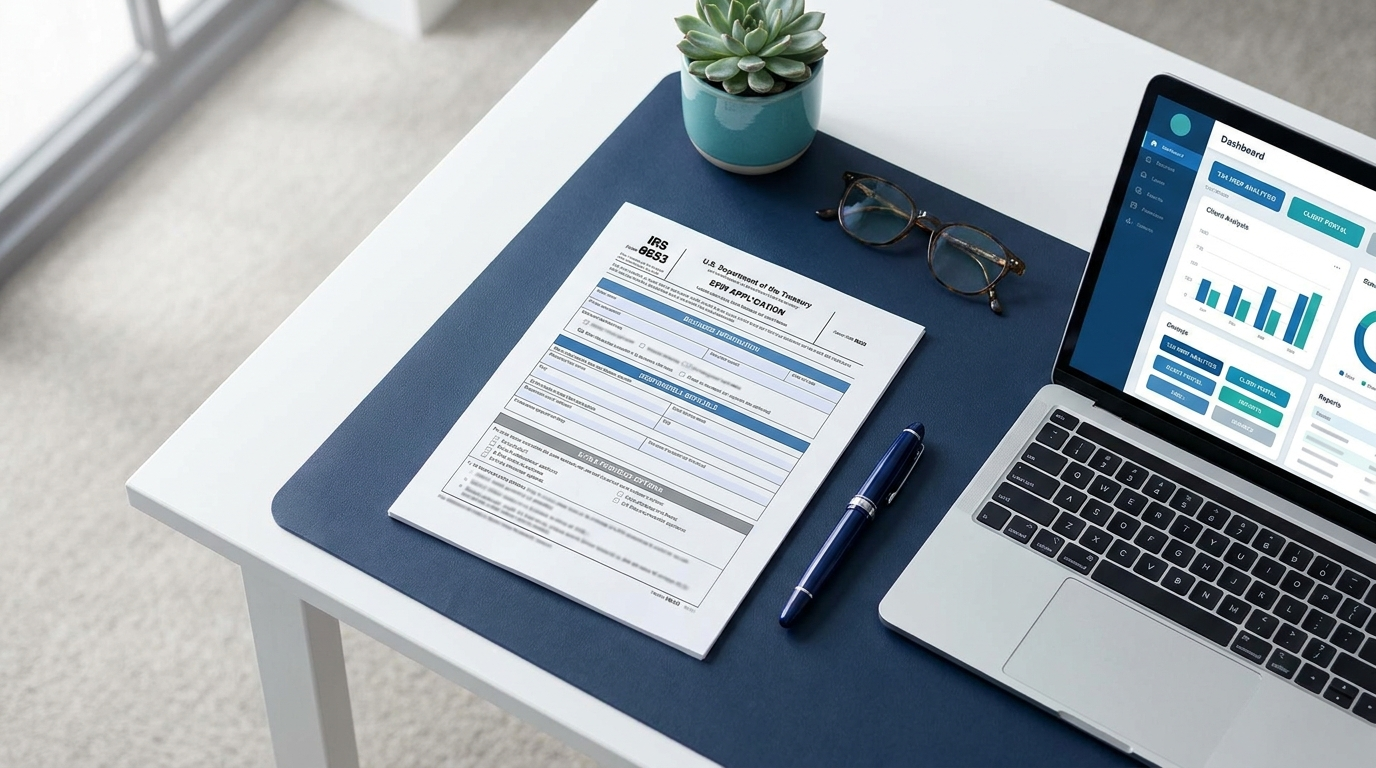
An EFIN is the IRS-issued number that authorizes you, your firm, or your tax office to e-file returns through the IRS e-File system. Any individual or business that originates the electronic submission of a federal tax return must have one. PTINs identify the preparer, but the EFIN identifies the firm doing the transmitting — and the IRS will not let you e-file without it.
Before you start the application, make sure you meet the basic IRS Publication 3112 requirements. The bar is not high, but every applicant must clear it:
The IRS application is broken into three steps inside the IRS e-Services portal. Plan to complete all three in a single session if possible — the system times out aggressively and partial applications are easy to lose.
Save yourself hours of back-and-forth by gathering everything before you log in to e-Services. At minimum, have ready your government-issued photo ID, Social Security card, your firm's EIN letter (if filing as a business), proof of business address, and a fingerprint card if your state requires one. Foreign-born preparers should also have their permanent resident documentation on hand.
The IRS publishes a 45-day timeline for EFIN issuance, but in practice most new applicants in 2026 are waiting between 45 and 75 days from submission to approval. The suitability check is the slowest stage, and it is also the one applicants have the least control over. If you want to be ready for January 15, you should be in the application by early October at the latest.
Most rejections fall into a handful of predictable categories. Knowing them in advance is the difference between a 45-day approval and a 6-month back-and-forth.
An EFIN application can take two months, but a tax office cannot. The smart play is to use the waiting period to set up everything else: choose your tax software, complete your training, finalize your client engagement letters, register your business with your state, and start marketing. At ETS, our Non-EFIN Owner package was designed exactly for this stage — you onboard, train, and start preparing returns while your own EFIN clears the IRS suitability check.
“The biggest mistake I see new preparers make is waiting on the IRS to do everything else. Your software, your training, your marketing — all of it should be done before your EFIN letter shows up. That way January 15 is a green light, not a panic.” — ETS Training Team
Getting your EFIN in 2026 is straightforward if you go in prepared: meet the eligibility bar, gather your documents before you start, complete all three application stages in one sitting, and plan for a 45-to-75-day wait. Use that wait productively, and you will start the season fully set up rather than scrambling. If you want a team that has guided thousands of preparers through this exact process — software, training, banking partners, and support — that is what Executive Tax Software was built for.